The Glory of Repentance: Learning Courage and Hope from The Lord of the Rings

The following contains spoilers for those who have neither read nor seen The Lord of the Rings (specifically The Two Towers book, chapter one, or the film version of The Fellowship of the Ring).

Several weeks ago, some friends and I were talking about our favourite books, and the topic turned (as it often does with me) to The Lord of the Rings. Among us weremy friend Mike, and a nine-year-old girl named Beatrix, who has read both The Lord of the Rings and The Silmarillion. Mike asked her what her favourite part of The Lord of the Rings was, and when she answered that it was the death of Boromir, I said it was the same for me. Mike said, ‘That’s so many people’s favourite part! What is it about that scene that people love so much?’ Bea and I turned to one another, and began to discuss it. I then had the humbling and inspiring experience of learning about Tolkien’s work from a girl less than half my age. We concluded that it was, in short, because of how wonderful was the redemption of Boromir. That he should fall so far, and yet rise so much higher in a few moments, inspires us with courage, hope, and love. 

Continue reading “The Glory of Repentance: Learning Courage and Hope from The Lord of the Rings”

Sharing Sorrow: Why We Read Sad Literature

The other night some friends and I were discussing sorrowful literature—why we read it and so often cherish it. Even if a book is mostly not sad, the parts of it that inspired sorrow in us remain in our minds, provoking a continued and deep reflexion in us, and very often they hold a special place in our hearts. Such scenes as the funeral in the beginning of The Two Towers (in The Fellowship of the Ring film version), the death near the end of Anne of Green Gables, and the final depressive spiral and death in Anna Karenina—if we’ve read these, we remember them with particular intensity, not just as a once intense feeling, but as a deep and solemn experience. I ventured to ask my friends why we seek this out, and here I reflect on some of what I have learned.

Continue reading “Sharing Sorrow: Why We Read Sad Literature”

Faith through Friendship and Communion

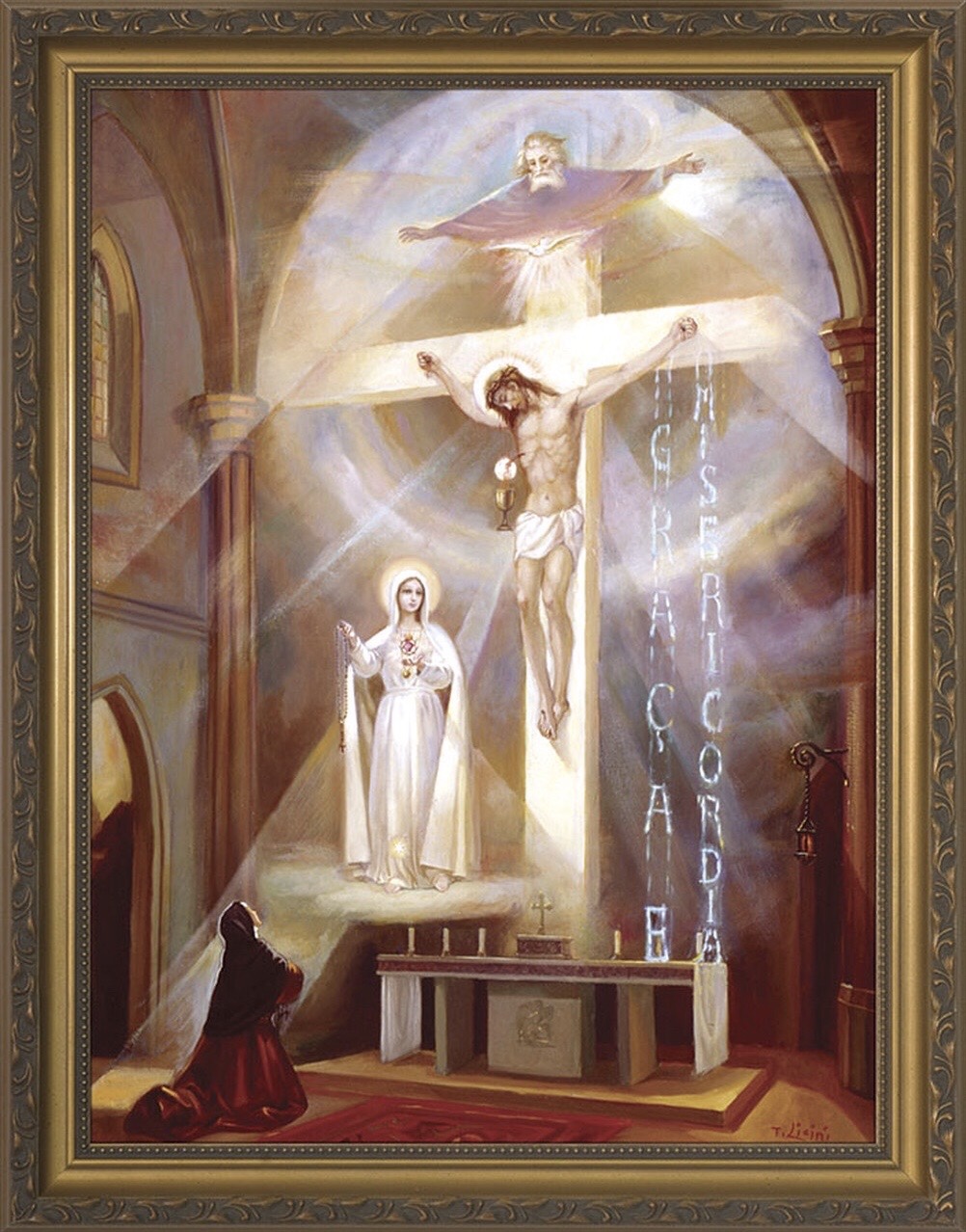
Happy feast day! In honour of today’s Feast of the Queenship of Mary, here follows a reflexion on the Mass and Holy Communion based on a vision of the Mass given to Sister Lucia, one of the visionaries of Fatima, on June 13, 1929. The description from her memoir, and the picture of the painting of the vision (above), I obtained from Holy Family School of Faith’s website.

Continue reading “Faith through Friendship and Communion”

In the Garden of the Soul

Due to travelling and a wedding, I was not able to write a blog post last week. The question is, what were you doing instead of reading my blog? There are many more excellent things to do, and I pray that this blog does indeed inspire you to go and do them: to read a good book, enjoy a beautiful sunset, spend time before the Eucharist, meditate with the Rosary, and engage in good conversation. So I am truly glad you are here, and reading what I, presently—though for you two days ago—am writing for you. And I have something different for you this week: As I asked you what you did instead of reading my blog, I shall share what I did instead of writing it.

Continue reading “In the Garden of the Soul”

O Star, O Flame, O Mighty Wind

Here follows a poem I wrote over two years ago, inspired by the following passage from the Diary of St. Faustina. I have edited the poem only a little, and left it in its simplicity, for I knew almost as little then of poetry as I do now.

April 4, 1937. Low Sunday; that is, the Feast of Mercy. In the morning, after Holy Communion, my soul was immersed in the Godhead. I was united to the Three Divine Persons in such a way that when I was united to Jesus, I was simultaneously united to the Father and to the Holy Spirit. My soul was flooded with joy beyond understanding, and the Lord gave me to experience the whole ocean and abyss of His fathomless mercy. Oh, if only souls would want to understand how much God loves them! All comparisons, even if they were the most tender and the most vehement, are but a mere shadow when set against the reality.

When I was united to the Lord, I came to know how many souls are glorifying God’s mercy.

Diary: Divine Mercy in My Soul, paragraph 1073
O Trinity, O Love, 
You are the greatest of lights, 
encompassing the whole universe; 
You shine as a thousand stars, 
shimmer as a thousand seas. 
Yet also are You a fire, 
passionate, roaring, consuming, 
inescapable, untamable; 
Your Heart ignites the hearts of men, 
giving Life to souls who dwell in Death. 
Still also are You, O Love, a storm, 
almighty, incomprehensible; 
inspiring dread in the great, 
and awe in the weak; 
greater than the skies,
more awesome than the seas; 
at Your Love all men weep, 
all hearts quake, 
                   all souls cry out, 
all the world bends its knee: 
For You, 
O Light of Lights,
O Consuming Fire, 
O Mighty Tempest, 
Did Yourself pour out 
in gentle compassion, 
to heal the wretched, 
to abide in the dead, 
for the life of the world. 

And he said, Go forth, and stand upon the mount before the Lord. And, behold, the Lord passed by, and a great and strong wind rent the mountains, and brake in pieces the rocks before the Lord; but the Lord was not in the wind: and after the wind an earthquake; but the Lord was not in the earthquake:

And after the earthquake a fire; but the Lord was not in the fire: and after the fire a still small voice.

And it was so, when Elijah heard it, that he wrapped his face in his mantle, and went out, and stood in the entering in of the cave.

1 Kings 19:11-13

Though we speak much we cannot reach the end,

    and the sum of our words is: “He is the all.”

Sirach 43:27

Filial Piety as Devotion & Self-Sacrifice in the Film Tokyo Story

In one of my university classes we viewed the film Tokyo Story,1 which presents Noriko, one of the protagonists, as an admirable woman who lives out the virtue of filial piety to the parents of her deceased husband. Although my family tried to impress such ideals upon me in accordance with the Christian worldview, I did not have a deep belief in filial piety and deference to one’s parents. But as I’ve matured and grown in character, I’ve come to a better understanding of not only obedience to authorities, especially parents, but of special devotion to them. Noriko’s story and her display of the Japanese understanding of filial piety helped me see this virtue in a new light. 

Continue reading “Filial Piety as Devotion & Self-Sacrifice in the Film Tokyo Story”

Abuse of Language—Abuse of Power: An Essay in Review

I’ve recently had the great delight of reading Abuse of Language—Abuse of Power, an essay by Catholic philosopher Joseph Pieper, and I want to share a few of my thoughts to entice you to pick it up. You would buy it in book form, but it really is an essay, 54 pages in a pamphlet-sized copy. Even so, there’s a lot of gems and excellent discourse packed into it. Pieper aims at addressing how Plato’s criticisms of the sophists in his day are quite relevant to us with regard to modern-day sophism. He first spends some time defining sophism and Plato’s counter-view, then ventures on to discuss how the sophistic abuse of language is used in surprisingly myriad ways today—from advertising to the paradigm of academia—in order to distort truth and manipulate others’ perceptions of reality. This abuse, argues Pieper, forms the beginning of tyrannies such as the Soviet regime. To make his points, he takes the reader through history from Plato to the present day, examining the course of man’s thought on the ideas of language, truth, reality, science, knowledge, and freedom. It is along this path that I found some of the most intriguing ideas in his essay, such as what it means for something to be true, and what freedom is. Pieper’s thoughts and his conclusions are relevant to most readers, since they address the nature of communication itself, the pursuit of knowledge and why man does pursue it, and what safeguards and threats there are to higher education, to the ‘academy’. These obviously pertain to all readers as individuals and as members of society, and I have long since pondered in my mind and heart the matters unfolded in this essay. 

Continue reading “Abuse of Language—Abuse of Power: An Essay in Review”

Friendship & Good Conversation through the Lost Art of Letters

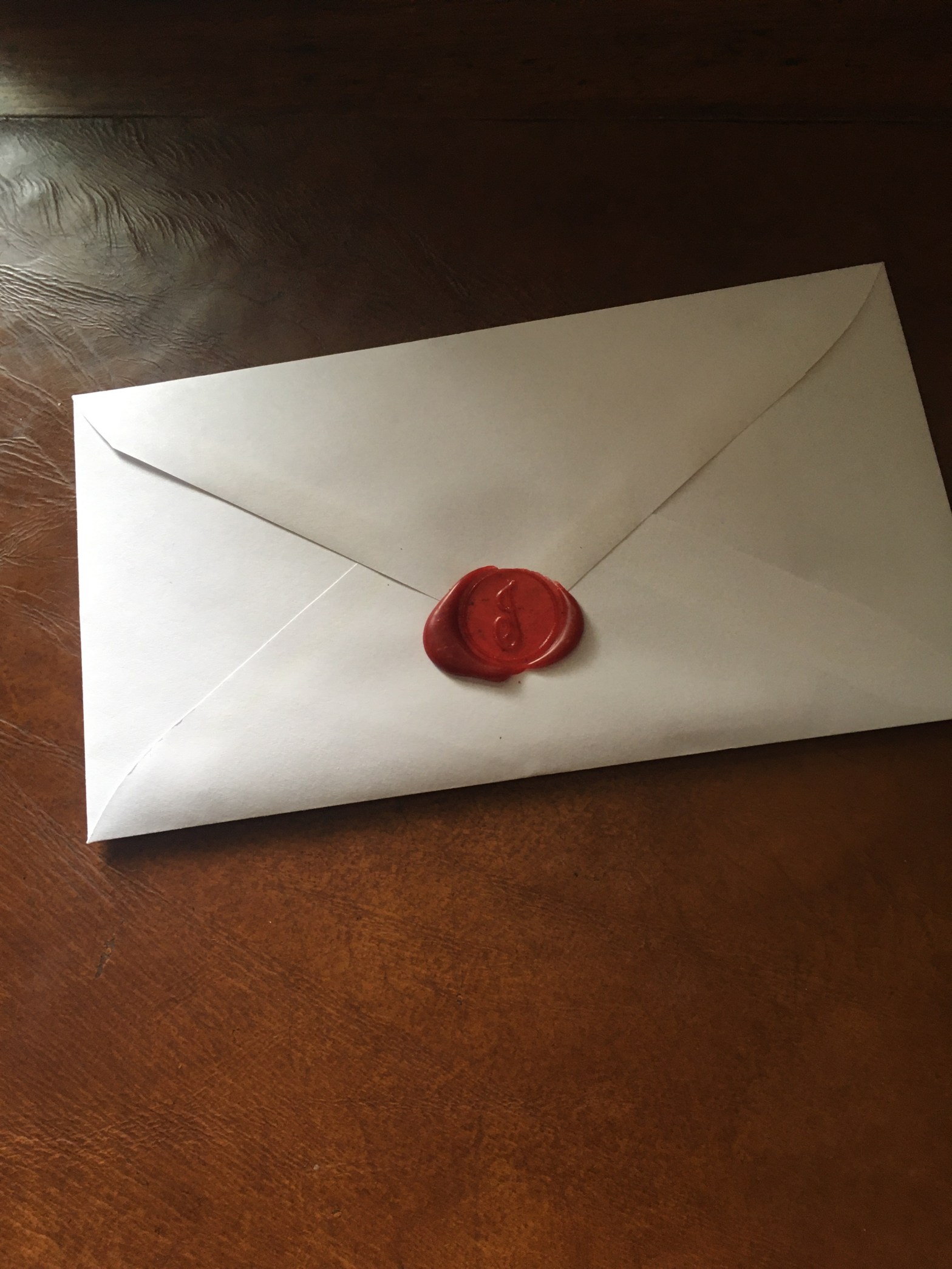
This past year some friends and I have taken up letter-writing as means of correspondence, both friends who live in the same town as I and those some leagues away. In light of my fruitful experiences in this endeavour, I want to share its benefits and encourage you to take up this worthy exploit. 

Continue reading “Friendship & Good Conversation through the Lost Art of Letters”

Apologetic Book Review ~ On Killing: The Psychological Cost of Learning to Kill in War and Society

In writing this review of the book On Killing: The Psychological Cost of Learning to Kill in War and Society, by Lt. Col. Dave Grossman, I found myself writing a preemptive defence against any attacks that might arise against this book when I recommended it. But given the title (the subtitle is key, but likely missed), and a couple comments I received on Goodreads regarding my reading this book, I find necessary a preemptive, apologetic justification, for this is one of the best non-fiction secular books I have read, and I highly recommend it to a wide audience. To go into the details of all I learned would reduce the work that the author put into his research and would thus nullify his arguments, and because what he argues is controversial and novel, I shall not risk this. Moreover, to analyse the book point-by-point would require restating much of it and would thus result in a shorter book, so I shall not waste our time with that. This shall instead be an evaluation of the areas which especially engaged me, the merit of his writing, the questions he asks, and the importance (to me and, likely to you) of the answers. Finally, I shall explain why I give this only four out of five stars. 

Continue reading “Apologetic Book Review ~ On Killing: The Psychological Cost of Learning to Kill in War and Society”

My Journey to Black Belt: A Personal Narrative

Foreword: Here follows part of a talk I wrote regarding my personal journey to my MMA Black Belt specialising in Krav Maga. I wanted to share a personal narrative, and I thought this was a good way to do so.

This is a part of my story. We all have a part in a grand story, and each of us in a way tells a story with our lives: Our successes, failures, wounds, scars, and struggles all form this story. My journey to Black Belt isn’t a single chapter of my story—rather it has been part of several chapters of my life thus far. So I need to give you a bit of context. 

Three months before my first class—which was mistakenly the June belt test four years ago—I had just moved back to Lawrence from Anchorage, Alaska. I moved to Alaska in large part because I was at the lowest part of a years-long depressive and suicidal time in my life. The Summer after I moved back, the Summer I started Krav, I once took a wrong turn while driving and burst into tears out of anxiety and fear—so you can see how much I’d improved since before Alaska. I was no longer suicidal, but mostly because I distracted myself by staying busy, which increased my anxiety. I started therapy that same Summer that I started Krav, but—while I had an amazing therapist and that experience was invaluable—I couldn’t tell you if that was more beneficial to me or if Krav was. 

My school and training didn’t provide me with one single benefit, nor does it appeal to a single need of the soul or body, like a gym membership might. True health and wellbeing, and the greatest achievements in life, are holistic: They do not incorporate just the body, or just the mind, or just the soul. This is why Aristotle wrote that the virtuous path—which is the path to happiness—is the middle path between extremes. That is what I’ve found at this school. Here I’ve learned and continue to learn not only physical discipline and technique, but virtue, which leads to true happiness. I learned humility, which is to know oneself in light of the truth—to be able to acknowledge one’s limits, weaknesses, mistakes, strengths, and successes with neither pride nor false modesty. I learned prudence, like taking a break or pacing yourself to avoid unnecessary injury. I’ve learned justice in becoming more respectful of others. I’ve learned courage to push myself further than I thought was possible or desirable. And I learned meekness—one of the most misunderstood virtues. There’s an old phrase, ‘to meek a river’, which means to direct its power in a specific direction, neither damming it up nor letting it rage and overflow. Meekness is part of temperance, and it allows one to direct anger properly as power to accomplish a difficult task. Meekness is one of the most important virtues, I think, for Krav—the virtue of standing tall amidst of the storm, of using anger to fight furiously without letting it dominate you and turn into recklessness. I learned a lot of these by my failures in these areas. But we learn nothing from our successes. We learn only from our mistakes and from others’ successes. And that has been one of the most valuable lessons I’ve learned here. 

All this I’ve learned from the instructors and other role models we have at this school. The instructors here have encouraged me, admonished me, trained me and trained with me; they have taken an interest in me as an individual, and have pushed me to excel. They have done so not, I believe, because it’s their job, but rather out of a genuine desire that I learn and grow and prevail because they believe I can. The host of black belts and other senior belts here have also been role models; motivators and encouragers; and, many of them, friends. It may sound cliché to call my school a family; but when you see these people more often than you do a lot of your own family, when you fight against one another and with one another, when your intimacy with them might be directly proportional to the amount of accidental injuries you’ve given one another—when you laugh, sweat, maybe bleed, and train together in something like what I’ve described here—you become a sort of a family—strange, but good. 

I have said nothing here about fitness or self-defence, how I’ve come to be able to walk in peace wherever I go. That’s because I had a 1000-word limit on this talk. That is important to me. But it remains that I may never need to use self-defence. And all of us shall grow old and diminish in health and fitness. So, invaluable as Krav Maga is, I have emphasized here what has been of greatest value on my journey to Black Belt: The people I’ve come to know, and the lessons of virtue and true strength that they have shared. 

As an exhortation to myself and you, I’ll close with one of my favourite quotes, from a speech given at Westminster University in October of 1941 by Sir Winston Churchill: ‘never give in, never give in, never, never, never, never—in nothing, great or small, large or petty—never give in except to convictions of honour and good sense. Never yield to force; never yield to the apparently overwhelming might of the enemy.’